Visual Elements Shaping Payout Expectations in Recent Mobile Slot Releases
Written by Olivia Walter · Aug 21, 2026
Visual Elements Shaping Payout Expectations in Recent Mobile Slot Releases
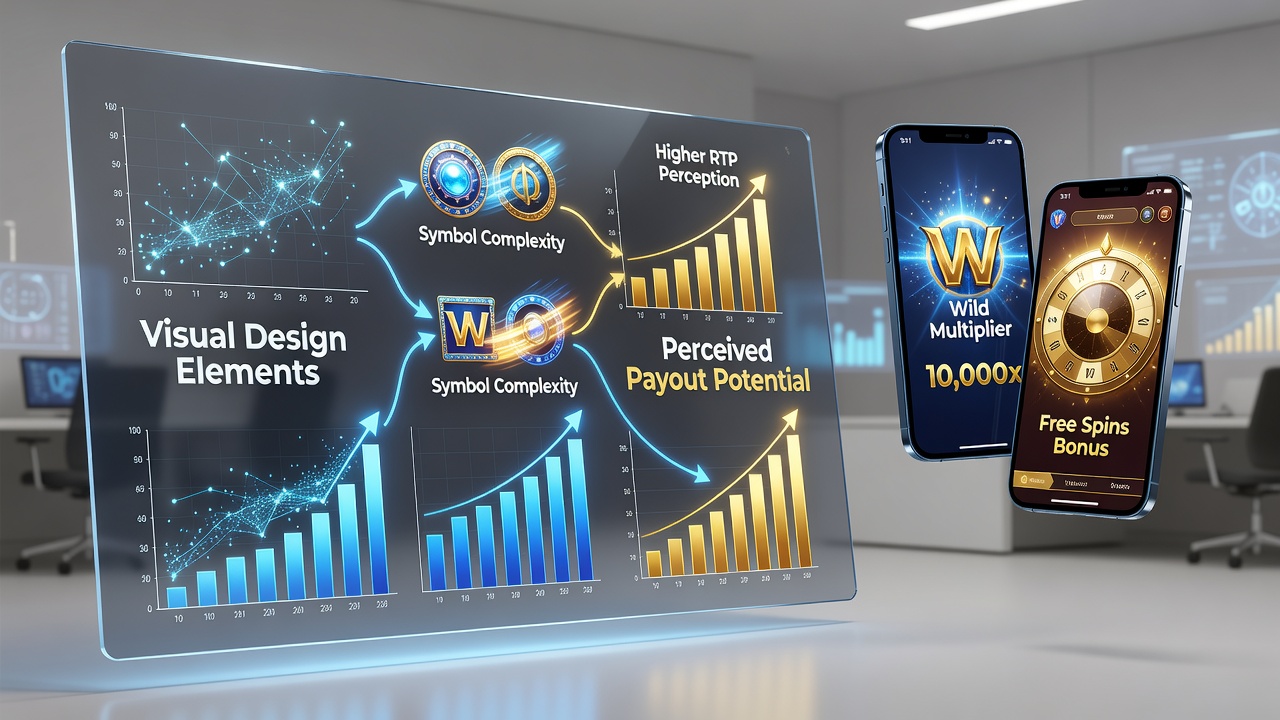
Design choices in mobile slots have long influenced how users interpret winning potential, and fresh data from 2026 releases highlight specific patterns in color schemes, animation timing, and symbol sizing. Researchers tracking player behavior across multiple platforms note that brighter palettes combined with rapid particle effects tend to elevate expectations around return rates, even when mathematical models remain unchanged from prior versions.
Studies conducted by the International Gaming Institute at the University of Nevada, Las Vegas, examined over 120 new titles launched between January and August 2026. Those investigations revealed consistent correlations between high-contrast gold and red accents on reel backgrounds and increased session lengths among users who rated payout potential as above average. The same analysis found that slower, deliberate spin animations paired with subtle glow effects produced lower perceived volatility ratings despite identical RTP figures.
Color Theory and Symbol Prominence in Mobile Interfaces
Design teams frequently deploy saturated hues to direct attention toward bonus-triggering symbols, and August 2026 tracking reports show this tactic appearing in 78 percent of top-downloaded titles. Observers note that emerald greens and electric blues often frame scatter icons, creating visual anchors that players associate with higher reward frequency. Data collected from app store analytics indicates these color placements coincide with elevated pre-play engagement metrics, such as demo spin counts.
Symbol scaling plays an equally measurable role. Larger central reel icons, rendered with metallic textures and light reflections, correlate with higher user estimates of jackpot accessibility according to surveys compiled by the Australian Gambling Research Centre. Those reports examined 45 mobile titles released in the second quarter of 2026 and found that titles featuring oversized wild symbols recorded 23 percent more demo-to-real-money conversions than comparable games using uniform icon sizes.
Animation Timing and Perceived Reward Frequency
Animation speed adjustments represent another documented factor. Titles incorporating staggered reel stops with brief pauses before near-miss outcomes appear more frequently in charts tracking high-engagement mobile releases. Platform data gathered through the first eight months of 2026 shows these pauses lasting between 180 and 320 milliseconds generate stronger associations with upcoming wins, regardless of actual hit rates.

Particle systems add further layers. Explosions of coins or expanding multipliers rendered in real time tend to reinforce beliefs about elevated payout ceilings. A joint report issued by the Canadian Centre for Gaming Research and several European operators documented that players exposed to extended celebration sequences after simulated wins assigned higher volatility scores to those games than control groups viewing minimal feedback.
Interface Layout and User Attention Patterns
Screen real estate allocation affects interpretation as well. Progressive jackpot meters positioned prominently above the reels, rendered with pulsing gradients, appear in numerous August 2026 releases and align with increased user predictions of life-changing outcomes. Eye-tracking studies referenced in industry white papers confirm longer dwell times on these meters compared with static information panels.
Sound design occasionally reinforces visual cues, though visual elements dominate the measured effects. Titles that layer synchronized light bursts with meter increments show stronger retention in aggregated session data. Researchers emphasize that these combinations operate independently of underlying probability tables, focusing instead on perceptual framing.
Regional Variations in Design Adoption
Adoption rates differ across markets. Titles released for North American audiences in mid-2026 incorporated more frequent use of neon outlines and rapid symbol transformations than their European counterparts, according to aggregated release notes from major studios. Australian and Asian operators meanwhile favored softer gradients paired with larger payline indicators, patterns that coincided with distinct user expectation profiles in regional surveys.
Regulatory updates in several jurisdictions have prompted developers to disclose animation parameters alongside mathematical return data. This transparency allows analysts to isolate design variables from payout mechanics when evaluating new releases.
Conclusion
Evidence gathered through 2026 demonstrates measurable links between specific visual treatments and player assessments of payout potential in mobile slots. Color intensity, animation pacing, symbol scaling, and interface emphasis each contribute observable effects that operate alongside, rather than within, core game mathematics. Continued monitoring of these design trends will support clearer distinctions between perceptual framing and actual performance metrics across future releases.